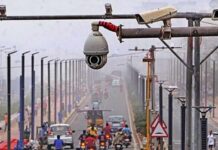


For many years, cameras were simple, predictable things. They watched, they recorded, and they stored evidence. CCTV systems were installed after incidents, expanded after losses, and reviewed only when something went wrong. They were treated as a necessary expense, equipment that belonged strictly to the security department. Their value was measured almost entirely in terms of deterrence and investigation. Then, almost without anyone noticing, something fundamental began to change. Cameras stopped being passive observers and slowly started becoming active contributors to the way businesses operate.
Today, cameras no longer just watch premises. They manage processes, measure productivity, influence sales, optimize operations, and help managers take decisions in real time. What was once purely a surveillance device has quietly transformed into an enterprise-wide business tool. This shift is perhaps the most important evolution the physical security industry has experienced in decades.
 The CCTV journey in India followed a familiar trajectory. In the early days, cameras were largely used for perimeter protection and theft prevention. Over time they became tools for investigation and compliance, helping organizations replace manual registers and reduce dependence on human supervision. As technology improved, they became standard infrastructure in offices, factories, retail outlets, and public spaces. Yet their role remained limited to security. The turning point came with the arrival of artificial intelligence, video analytics, and integration technologies. Suddenly cameras were no longer just recording devices; they became sensors capable of generating actionable business intelligence.
Across industries, organizations began to realize that video data could answer questions far beyond security. A national retail chain could now use cameras to understand how customers moved inside a store. A factory could analyze whether safety protocols were being followed. A logistics company could measure how efficiently trucks were being loaded. A hospital could monitor patient flow and improve service delivery. The camera had become a universal business tool, relevant to almost every function within an enterprise.
For Chief Security Officers, this transformation has been particularly significant. Earlier, the success of a CSO was measured by how effectively incidents were prevented and investigated. Today, CSOs are increasingly evaluated on how much operational value they bring to the organization. Modern video systems allow them to track adherence to standard operating procedures, monitor vendor performance, validate service-level agreements, and provide objective data to management. Cameras now help answer practical business questions: Are employees following processes correctly? Are service providers meeting contractual commitments? Are safety norms being respected on the shop floor? The CSO is no longer just a custodian of assets; he or she has become a partner in business efficiency.
Where Cameras Became Business Intelligence
 Perhaps no industry illustrates this change better than retail. For decades, cameras in stores were installed almost exclusively to prevent shoplifting. Today they play a central role in retail strategy. Modern retailers use video analytics to measure footfall, analyze customer behavior, manage queues, evaluate staff productivity, and even understand demographic trends. Heat mapping tools help store managers decide where to place high-margin products. Dwell-time analysis shows which displays attract the most attention. Queue analytics help optimize cashier staffing. Cameras have effectively become the eyes and ears of retail business intelligence.
For malls and large commercial complexes, the applications are even broader. Video systems help management understand crowd flow, parking utilization, tenant performance, and the effectiveness of promotional events. Food courts use analytics to study seat occupancy and peak usage hours. Facility teams monitor housekeeping efficiency and maintenance response times. Decisions that were once based on intuition are now driven by real, measurable video data. In such environments, CCTV dashboards are discussed in daily operations meetings rather than only in security reviews.
Camera as a Process Auditor
Manufacturing has experienced a similar transformation. On factory floors, cameras are no longer limited to watching entry gates and storage areas. They have become integral to process control and quality assurance. Video analytics are used to monitor PPE compliance, track production lines, detect defects, verify assembly procedures, and ensure adherence to safety protocols. In automotive plants, cameras confirm that components are fitted in the correct sequence. In pharmaceutical units, they help enforce strict hygiene standards. In food processing facilities, they monitor cleanliness and prevent contamination risks. Many factories now integrate video feeds with MES, SCADA, and ERP platforms, making cameras an essential element of Industry 4.0 initiatives. For plant managers, video has evolved from a security tool to a digital supervisor that helps keep operations running smoothly.
Visibility Across the Supply Chain
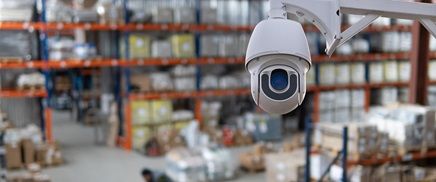 Logistics and supply chain operations have perhaps seen the most dramatic non-security adoption of cameras. Warehouses and distribution centers today rely on video systems to manage dock operations, monitor vehicle turnaround times, verify loading and unloading processes, and resolve disputes with vendors. Analytics help managers understand congestion patterns, track forklift movement, and ensure proper handling of goods. E-commerce companies use cameras to count packages, confirm order accuracy, and provide proof of delivery. In cold chain logistics, video is used to ensure temperature-sensitive goods are handled correctly. In this sector, CCTV has become less about protection and more about transparency and efficiency.
Understanding and Managing the Hybrid Workplace
Even corporate offices, traditionally low-risk environments, are finding new uses for video systems. In the post-pandemic world, organizations are using cameras to understand workspace utilization, optimize meeting rooms, manage cafeterias, and plan hybrid work policies. Facilities teams analyze occupancy trends to reduce energy costs and improve employee experience. HR departments use anonymized analytics to design better seating layouts and optimize transport services. What was once a purely security-focused infrastructure is now helping shape the modern workplace.
Cameras: Care Enablers
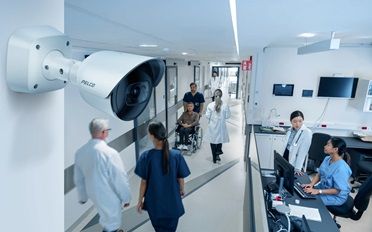 Hospitals and healthcare institutions have also embraced this expanded role of cameras. Beyond protecting patients and assets, video systems now support queue management, patient safety, infection control compliance, and emergency response. Analytics help administrators reduce waiting times, improve staff deployment, and monitor critical processes. In many hospitals, video feeds are reviewed not just by security teams but by operations and clinical management as well.
Cameras as Smart Sensors in Cities
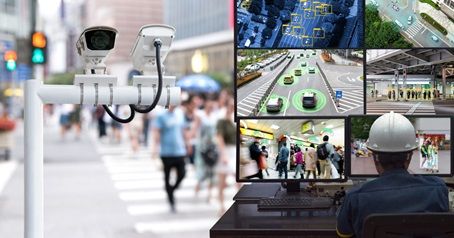 At the city level, cameras have evolved into urban management tools. Smart city projects across India now use video systems for traffic management, crowd control, waste monitoring, disaster response, and public service optimization. Cameras have effectively become digital sensors feeding real-time data to command-and-control centers. Their purpose has expanded far beyond law enforcement to include overall improvement of urban life.
This dramatic change was made possible by three major technological developments. Artificial intelligence allowed cameras to interpret what they were seeing instead of merely recording it.
Integration technologies enabled video platforms to connect with ERP, POS, access control, and building management systems. Cloud computing and advanced dashboards made insights available to managers anywhere, anytime. Once cameras started delivering structured, measurable data, they naturally became part of mainstream business decision-making.
Cameras that Work Alongside People
An important dimension of cameras becoming true operational tools is the rapid adoption of body worn cameras. Unlike fixed CCTV systems that observe spaces, body cameras travel with people and capture events from the user’s point of view. For security guards, law enforcement officers, delivery staff, field engineers, and even retail associates, the camera has become part of their daily equipment, much like a radio or an access card. Body worn cameras are now used to document incidents, de-escalate conflicts, improve behavioral discipline, and create real-time accountability. In customer-facing environments such as airports, hospitals, and public service counters, their presence alone often improves conduct on both sides. Here the camera is not just watching an operation; it is actively shaping how that operation is performed.
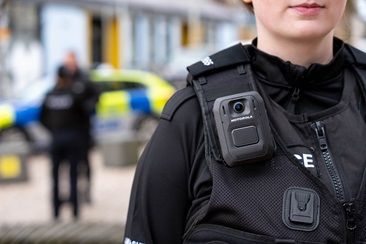 From a business perspective, BWCs have evolved into powerful process-management tools. Logistics companies use them to record proof of delivery and prevent false claims. Facility management firms deploy them to audit housekeeping and maintenance tasks. Retail chains use them for dispute resolution at billing counters and for training frontline staff. Police departments and private security agencies rely on them for transparent evidence collection and to reduce complaints against personnel. With live streaming and cloud integration, supervisors can now guide field teams in real time, turning the body camera into a remote assistance device. This represents the purest form of the “camera as a tool” concept, the video system is no longer mounted on a wall; it is carried by the worker, becoming an extension of the job itself.
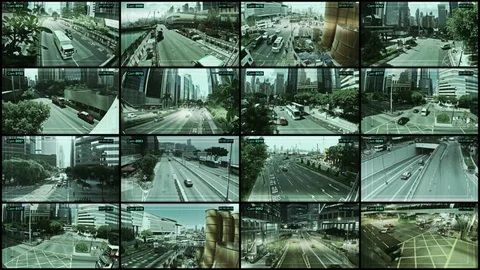 Equally important has been the organizational shift around ownership of CCTV systems. Earlier, cameras were purchased, managed, and controlled exclusively by security departments. Today, multiple stakeholders are involved – IT teams, operations heads, marketing departments, HR, supply chain managers, and quality controllers. Budgets for video systems increasingly come from digital transformation initiatives rather than only from security allocations. The camera has become a shared enterprise platform rather than a departmental asset.
This shift has also created a policy paradox. At a time when cameras are becoming critical to productivity and business continuity, regulatory and procurement frameworks often continue to treat them as simple security products. Standards and certification requirements sometimes overlook the fact that modern video systems impact far more than physical protection. Any disruption in the availability of advanced video technology therefore affects not just security operations but entire business processes.
Looking ahead, the role of cameras will only expand further. In the near future, they will function as autonomous quality inspectors, predictive safety monitors, customer experience enhancers, and real-time compliance auditors. Video data will merge with inputs from IoT sensors, access control systems, wearables, and enterprise software to create truly intelligent environments. Cameras will not just observe reality, they will help shape it.
The very term “CCTV” is beginning to feel outdated. What started as closed-circuit television has evolved into visual IoT, operational intelligence, and digital transformation infrastructure. For decades, organizations asked whether they really needed so many cameras. Today they ask how they ever managed to run their businesses without them.
Cameras have crossed a quiet but decisive threshold. They are no longer merely silent witnesses to events. They have become essential tools of management, efficiency, and growth. And that transformation may ultimately be the most significant contribution the security industry has ever made to the broader world of business.