

Security threats do not disappear after sunset. In fact, incidents such as intrusion, theft, vandalism, and perimeter breaches often become more likely during nighttime hours when visibility is poor and human monitoring becomes difficult. This makes low-light surveillance one of the most critical aspects of modern security infrastructure.
A surveillance system is only as effective as the quality of the image it captures. Poor visibility can affect situational awareness, delay response times, and compromise investigations. Traditionally, surveillance cameras struggled in dark environments, often producing grainy footage with very little usable detail. However, advances in imaging technology, artificial intelligence, and sensor engineering have significantly transformed low-light surveillance capabilities.
The Science Behind Low-light Imaging
At the core of every low-light camera lies the image sensor, which determines how effectively the camera can capture available light. Modern surveillance cameras use highly sensitive CMOS sensors, larger pixel sizes, and advanced image processing technologies to improve visibility in dim conditions.
Low-light performance is commonly measured in lux, a unit used to indicate the amount of visible light present in a scene. While daylight conditions may measure thousands of lux, moonlight can offer less than one lux. Capturing usable video in such environments requires specialised technologies capable of maximising every available photon of light.
Technologies such as Wide Dynamic Range (WDR), digital noise reduction, and back-illuminated sensors help modern cameras maintain clarity and reduce distortion even under difficult lighting conditions.
Infrared Night Vision
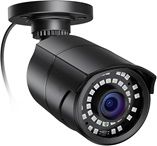 One of the most widely used low-light surveillance technologies is infrared (IR) imaging. IR cameras use infrared LEDs to illuminate scenes with light that is invisible to the human eye. The camera sensor captures this reflected infrared light and converts it into monochrome video images.
Infrared surveillance has become popular because it is reliable, cost-effective, and suitable for outdoor and perimeter applications. It enables cameras to monitor areas even in complete darkness without requiring visible lighting.
However, infrared systems also have limitations. Rain, fog, reflective surfaces, or excessive IR glare can affect image quality. In addition, IR footage is generally black and white, limiting the ability to identify colour-based details such as clothing or vehicle paint.
The Rise of Full-colour Night Surveillance
To overcome the limitations of monochrome night vision, manufacturers have developed advanced colour imaging technologies capable of retaining colour details in extremely low light.
Technologies marketed under names such as “Starlight,” “ColorVu,” or “Full-Color” use highly sensitive sensors, large-aperture lenses, and intelligent image enhancement algorithms to capture colour video even in near-dark conditions. Some systems supplement ambient light with warm LED illumination to improve visibility further.
Colour imaging provides significant operational advantages because colour details often become critical during investigations. Identifying a vehicle colour, a suspect’s clothing, or an object being carried can make a substantial difference during forensic analysis or incident review.
 Thermal Imaging and Heat Detection
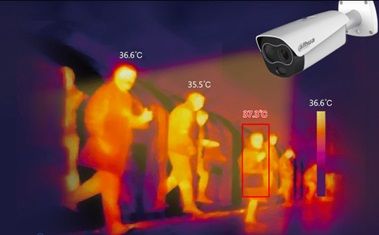
Another major advancement in low-light surveillance is thermal imaging technology. Unlike conventional cameras that depend on visible light, thermal cameras detect heat signatures emitted by people, vehicles, and objects.
This allows thermal cameras to function effectively in complete darkness as well as in challenging conditions involving smoke, haze, dust, or fog. Thermal surveillance systems are widely used in border security, critical infrastructure protection, industrial facilities, airports, and perimeter intrusion detection applications.
While thermal cameras are highly effective for detecting movement and identifying the presence of intruders, they are generally less suitable for detailed identification tasks such as facial recognition or number plate reading. As a result, thermal cameras are often integrated with conventional visible-light cameras in layered security deployments.
The Growing Role of Artificial Intelligence
Artificial Intelligence is now playing a transformative role in low-light surveillance systems. Earlier video analytics platforms frequently struggled during nighttime operations because shadows, headlights, insects, or image noise triggered false alarms.
Modern AI-powered systems use deep learning algorithms to distinguish humans, vehicles, and genuine threats more accurately. Advanced image enhancement technologies can also reduce noise, improve sharpness, and automatically optimise exposure settings under changing lighting conditions.
This has significantly improved the reliability of low-light analytics for applications such as perimeter protection, traffic monitoring, public safety, and smart city surveillance.
System Design Still Matters
Despite rapid technological advancements, low-light surveillance performance still depends heavily on proper system design. Camera placement, lighting conditions, lens configuration, reflective surfaces, and environmental factors all influence image quality.
Even the most advanced camera may deliver poor results if deployed incorrectly. This is why security consultants and system integrators increasingly adopt hybrid approaches that combine infrared imaging, thermal technology, AI analytics, and intelligent illumination systems for optimal performance.
Looking Ahead
As smart cities expand and critical infrastructure becomes increasingly digitised, demand for reliable 24×7 surveillance will continue to rise. Emerging technologies such as edge AI, adaptive illumination, multi-sensor cameras, and thermal-visible image fusion are expected to further improve low-light monitoring capabilities.
Low-light surveillance is no longer simply about recording footage in darkness. It is about generating actionable intelligence under the most challenging visibility conditions. For modern security operations, the ability to see clearly at night has become just as important as daytime surveillance itself.