



Most CCTV professionals are familiar with the term ONVIF, but many are unsure of what it actually stands for or why it is so important. In this edition of SU Gyan, we demystify ONVIF, explain how it enables devices from different manufacturers to work together, and why understanding it is essential for every security professional.
The security industry has undergone a remarkable transformation over the past two decades. Traditional analogue surveillance systems have largely given way to IP-based cameras, network video recorders (NVRs), video management software (VMS), access control systems, intercoms, and a growing range of intelligent edge devices. While this technological evolution has brought unprecedented capabilities, it has also introduced a significant challenge, ensuring that products from different manufacturers work together seamlessly.
Imagine deploying an IP camera from one brand, an NVR from another, and video management software from a third, only to discover that they cannot communicate effectively. Such compatibility issues can lead to increased costs, limited functionality, and unnecessary dependence on a single vendor.
This is where ONVIF comes into the picture.
ONVIF is a global and open industry forum that provides and promotes standardized interfaces for IP-based physical security products. ONVIF specifications are widely used as common communication interfaces between devices (such as IP surveillance cameras) and software clients (such as video management software). The interfaces enable ONVIF conformant products from different vendors to communicate with each other, giving system integrators and end users the flexibility to choose from a wide range of conformant products without being locked into a specific brand.
ONVIF was founded in 2008 by Axis Communications, Bosch Security Systems and Sony.
It is a leading and well-recognized industry forum driving interoperability for IP-based physical security products. The organisation has a global member base of established camera, video management system and access control companies and more than 30,000 profile conformant products.
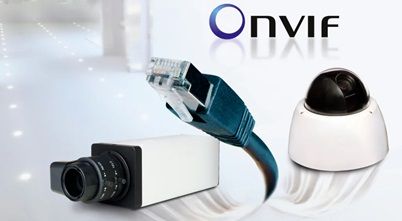 The ONVIF Network Specifications aim to standardize the network interface (on the network layer) of IP-based physical security products. It defines a communication framework based on relevant IETF and Web services standards including security and IP configuration requirements.
ONVIF today has a global membership of more than 500 companies, including leading manufacturers of physical security products. Collectively, these companies offer tens of thousands of ONVIF-conformant products, making ONVIF one of the most widely adopted interoperability standards in the physical security industry. Membership is open to any organisation interested in contributing to the development and promotion of open standards for IP-based physical security systems.
In November 2024, SECURITY UPDATE reported that ONVIF®, the leading global standardisation initiative for IP-based physical security products, had launched its first online learning course to help security professionals better understand ONVIF and its role in enabling interoperability.
Titled “Introduction to ONVIF”, the free interactive course provides a comprehensive overview of the organisation, its mission, and how ONVIF’s standardised interfaces enable seamless communication between IP-based physical security products and services. It also explains ONVIF profiles and add-ons, their practical applications, and the importance of the conformance process.
The course is available free of charge on the ONVIF website and is open to anyone interested in learning more about ONVIF, making it a valuable resource for installers, system integrators, consultants, and end users alike.
Examples of areas covered by the ONVIF Network Interface Specifications include: System settings; Query services and capabilities; Device discovery; Network configuration; Video and audio streaming; Event handling; PTZ camera control; Recording controls, and Access controls
Sidebar
ONVIF Profiles at a Glance
| Profile | Primary Purpose | Typical Applications |
| Profile S | Live video streaming, PTZ control, audio, and basic events | IP cameras, NVRs, Video Management Systems (VMS) |
| Profile G | Recording, storage, search, and playback of video | Cameras with edge storage, NVRs, archival systems |
| Profile T | Advanced video streaming, H.265/H.264, metadata, imaging settings, enhanced cybersecurity | AI-enabled cameras, modern surveillance systems |
| Profile M | Standardised exchange of metadata and AI analytics | Object detection, people counting, ANPR, facial recognition, smart video analytics |
| Profile A | Configuration and management of access control credentials and permissions | Access control systems, cardholders, credential management |
| Profile C | Door control, event management, and access control integration | Door controllers, readers, integrated security management systems |
| Profile D | Peripheral devices such as sensors, intercoms, relays, and input/output devices | Intercoms, intrusion detection systems, door stations, environmental sensors |
Thanks to ONVIF profiles, devices from different manufacturers can communicate using a common set of standards, significantly improving interoperability. This gives users the flexibility to combine cameras, recorders, video management software, and other security devices from different brands to create solutions that best suit their operational needs. It also reduces dependence on proprietary ecosystems, encouraging greater competition and helping lower costs for both manufacturers and customers.
However, interoperability is not always seamless in practice. While ONVIF defines common standards, manufacturers may implement different profiles or support only selected features within a profile. As a result, basic functions such as live video streaming and recording usually work without issue, but advanced capabilities—such as AI analytics, smart event detection, facial recognition, or specialised camera settings—may not be fully supported when devices from different brands are used together.
Ensuring Better Compatibility
To minimise compatibility issues, system integrators and and end users should take a few practical steps before making a purchase:
- Verify the ONVIF profile supported by each device, not just whether it is “ONVIF compliant.” Ensure that the camera, NVR, and VMS support the same profile (such as Profile S, T, or M) required for the intended application.
- Confirm feature compatibility with the manufacturer or system integrator, especially if advanced functions like video analytics, metadata, ANPR, or facial recognition are important.
- Request an interoperability demonstration before large-scale deployment. A pilot installation can reveal any limitations that may not be apparent from product specifications.
- Keep firmware up to date, as manufacturers often release updates that improve ONVIF interoperability and address compatibility issues.
- Consult the ONVIF Conformant Products List, available on the ONVIF website, to verify that products have been tested for conformance with the relevant ONVIF specifications.
By carrying out these checks during the planning stage, organisations can avoid unpleasant surprises after installation and build a security system that is both interoperable and future-ready.