



The replacement of the National Building Code (NBC) 2016 with the National Building Construction Standards (NBCS) 2026 marks a significant transition in India’s construction and fire safety landscape. While aimed at modernising building regulations, the shift has triggered widespread debate over its impact on enforcement, accountability, and life safety. This article explores the key changes introduced under NBCS 2026, industry concerns, and what the new framework could mean for architects, fire consultants, developers, and regulators across India.
India’s construction and fire safety ecosystem is witnessing one of its most significant regulatory transitions in decades. The Bureau of Indian Standards (BIS) has formally replaced the National Building Code (NBC) 2016 with the National Building Construction Standards (NBCS) 2026, notified on April 30, 2026 under SP 7:2026. The earlier NBC 2016 has simultaneously been withdrawn.
At first glance, the change may appear semantic, replacing the word “Code” with “Standards.” However, for India’s fire protection, life safety, security systems, and building compliance industries, the implications are potentially far-reaching. The transition has triggered intense debate among fire consultants, architects, safety professionals, developers, and regulators regarding whether the new framework modernises India’s building regulations or weakens long-standing safety safeguards.
From “Code” to “Standards”
The National Building Code has historically served as India’s primary model document for building design, construction practices, structural safety, fire protection, accessibility, and services engineering. Though technically recommendatory, NBC provisions were widely adopted by state governments and urban local bodies into their building bye-laws, thereby acquiring quasi-mandatory status in practice.
The new NBCS 2026 is part of a broader deregulation initiative driven by the Cabinet Secretariat to simplify compliance and reduce procedural ambiguities. According to reports, policymakers believed the term “Code” often led courts, approval agencies, and enforcement authorities to treat the NBC as legally binding even in areas where states had not formally adopted it.
Under the revised framework, greater authority has now been devolved to state governments and municipal bodies on matters such as development controls, administration, and fire safety implementation. Supporters argue that this aligns with India’s constitutional structure, since land and buildings are state subjects. Critics, however, fear that decentralisation without strong minimum national safeguards may create uneven safety standards across the country.
The Fire Safety Debate
 The most controversial aspect of NBCS 2026 relates to fire and life safety provisions. Under NBC 2016, several fire protection requirements were treated as essential benchmarks for building approval and fire clearances. Reports suggest the new framework adopts softer terminology, replacing many instances of “shall” with “should,” thereby making several provisions advisory in nature.
Even more significant is the revision of the height threshold for stricter fire compliance. Under NBC 2016, buildings above 15 metres attracted more rigorous fire safety requirements. NBCS 2026 reportedly raises this threshold to 24 metres.
 This change could potentially exclude a large number of mid-rise residential and commercial buildings from mandatory advanced fire protection provisions such as:
- Pressurised escape staircases
- Smoke extraction systems
- Automatic sprinkler systems in certain occupancies
- Enhanced compartmentation measures
- Advanced evacuation infrastructure
For the fire protection industry, this raises concerns regarding reduced adoption of critical systems in a large segment of India’s urban building stock.
Industry Concerns
Several fire safety experts and technical professionals have publicly expressed apprehension regarding the transition. Industry voices argue that India continues to face recurring fatal fire incidents in hospitals, coaching centres, factories, commercial complexes, and residential buildings. In such a scenario, many believe enforcement should become stronger rather than more flexible.
A number of professionals have also pointed to India’s historically inconsistent fire safety enforcement ecosystem. While premium commercial developments and institutional projects often adopt advanced fire engineering practices, compliance levels in smaller cities and mid-market developments vary significantly.
Critics fear that if national-level minimum provisions lose enforceability, some developers may prioritise cost optimisation over long-term life safety investments. The concern is particularly acute in the case of passive fire protection systems such as compartmentation, fire stopping, shaft protection, and evacuation engineering — areas already considered weak in many Indian projects.
Some experts have further warned that the move may increase dependency on local interpretations and discretionary approvals, potentially creating inconsistent compliance practices across states and municipalities.
Not Entirely a Dilution
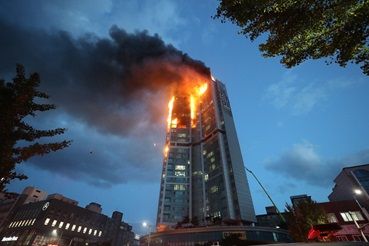 However, the transition is not being viewed negatively by all stakeholders. A closer examination suggests NBCS 2026 also introduces several modernisation measures and technical enhancements aligned with global practices. According to fire safety professionals reviewing the document, the revised standards include:
- More detailed mixed occupancy requirements
- Revised occupant load calculations
- Updated travel distance norms
- Expanded occupancy-specific firefighting tables
- Industrial hazard-specific fire suppression guidance
- Performance-based fire engineering provisions
- Enhanced metro station and trainway fire safety guidelines
- Updated kitchen fire protection references
- New annexures for specialised occupancies and industries
The introduction of performance based fire design is especially noteworthy. Traditionally, Indian building approvals have relied heavily on prescriptive compliance. Performance-based systems allow designers to achieve safety objectives through engineered solutions tailored to building characteristics, a practice common in advanced global markets.
Supporters of NBCS argue that modern fire engineering cannot remain overly rigid and that flexibility is necessary to encourage innovation, smart building integration, and efficient design solutions.
Offering a more nuanced perspective on the transition, a former Director of Fire Services believes the new framework represents a significant shift in India’s fire safety philosophy rather than merely a dilution of norms. According to him, the new regime moves away from the traditional “one size fits all” approach and places greater emphasis on accountability-driven fire safety design. He notes that there is no longer a standalone “NBCS compliance” requirement, with compliance now linked primarily to Development Control Regulations (DCRs) and local building bye-laws. He also points out that the revised framework could reduce contradictory provisions and overlapping enforcement mechanisms, making implementation more streamlined.
At the same time, he maintains that the revised Part F represents a substantial and necessary progression over NBC 2016 Part 4, particularly in the areas of life safety, smoke management, risk recognition and integrated fire protection systems. He believes the updated framework adopts a more occupant-centric and engineering-informed approach suited to modern building environments. In his view, the transition marks the beginning of a new era where stakeholders would need to “read, understand and apply” fire safety requirements on a case-to-case basis rather than simply follow minimum customary provisions.
Implications for the Security & Fire Industry
For readers of SECURITY UPDATE, the transition to NBCS 2026 could have significant implications across multiple segments of the industry.
 Fire Detection & Alarm Systems
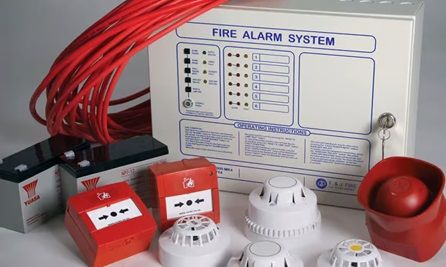
The revised thresholds may influence the demand pattern for fire alarm systems, smoke management solutions, and integrated evacuation technologies in mid-rise buildings. Developers may increasingly adopt a “minimum compliance” approach in certain projects unless local authorities mandate stricter norms.
At the same time, premium developers, data centres, airports, healthcare projects, and institutional campuses are likely to continue adopting higher standards voluntarily due to insurance, ESG, and business continuity considerations.
Fire Suppression Industry
Manufacturers and integrators of sprinklers, hydrants, suppression systems, fire pumps, and water mist technologies may closely monitor how state governments incorporate NBCS provisions into local bye-laws.
If states retain stronger mandatory provisions, market impact may remain limited. However, if several jurisdictions significantly relax enforcement, it could affect adoption in cost-sensitive projects.
 Electronic Security Integration
Modern fire and life safety systems are increasingly integrated with:
- Video surveillance
- Access control
- Building management systems (BMS)
- Public address systems
- Emergency communication systems
- AI-based occupancy monitoring
The evolution of NBCS could accelerate the trend toward integrated life safety platforms, especially if performance-based compliance gains wider acceptance.
Consultants & Compliance Professionals
Fire consultants, risk assessors, third-party auditors, and compliance specialists may witness increased demand for advisory and performance based design services. As standards become more flexible, professional expertise becomes more critical in ensuring actual safety outcomes.
The Enforcement Challenge
Perhaps the biggest issue is not the wording of the standards but the quality of enforcement.
India already possesses reasonably comprehensive fire safety guidelines on paper. Yet repeated fire tragedies often expose gaps in:
- Maintenance of systems
- Blocked escape routes
- Non-functional sprinklers
- Inadequate evacuation planning
- Illegal alterations
- Weak inspection mechanisms
- Poor occupant awareness
The former Director of Fire Services also emphasises that the effectiveness of both NBC 2016 and the revised Part F ultimately depends on the competency of the stakeholders implementing them. According to him, the transition from a prescriptive, component-based approach to a more integrated and system-driven framework will require significant upskilling across the ecosystem, including designers, approving authorities, installers and facility operators.
He notes that stakeholders must understand not only what the code requires, but also the engineering rationale behind interconnected systems such as alarms, HVAC controls, pressurisation and smoke management. He further stresses that advanced systems like smoke control, pressurisation and networked alarms are highly performance sensitive and require proper commissioning, testing and periodic validation to remain effective.
 He believes that unless the industry simultaneously invests in competency development, certification mechanisms and practical training programmes, the intended safety benefits of the revised standards may not fully translate into real-world life safety outcomes.
Experts argue that merely making rules stricter does not guarantee safer buildings unless enforcement, audits, training, and accountability improve simultaneously. In fact, some professionals believe performance based approaches could improve safety outcomes if implemented through qualified fire engineers and rigorous third-party verification systems. The challenge lies in ensuring that flexibility does not become a loophole for compromised safety.
A Turning Point for India’s Built Environment
The replacement of NBC with NBCS marks a major turning point in India’s building regulation philosophy. It reflects a shift from centrally framed prescriptive control toward decentralised, standards-based governance.
Whether this transition strengthens India’s construction ecosystem or weakens critical safeguards will depend largely on how states, municipalities, developers, and enforcement agencies respond over the next few years.
 Balasubramanian K. of Qpro Design Consultants, Chennai believes the transition to NBCS 2026 also presents an opportunity for closer collaboration between the fire protection industry and state fire authorities. According to him, consultants, system designers and fire safety professionals should proactively engage with state fire departments to help develop and refine local fire safety requirements and implementation frameworks under the new standards regime. He suggests that such industry participation would be critical in ensuring technical consistency, practical enforceability and effective adoption of fire and life safety measures across jurisdictions.
Dr. Lalit Gabhane, Director-General & CEO, National Safety Council of India observes that with the introduction of NBCS 2026, the onus will increasingly shift to states and Union Territories to develop fire safety regulations suited to their own risk profiles, urban conditions and enforcement realities, while using the national standards primarily as a guiding framework. He also stresses the need for a state-wise fire incident data repository that can help authorities analyse fire trends and evaluate the effectiveness of NBCS-related compliance measures.
 For the fire and security industry, the development is both a challenge and an opportunity. On one hand, concerns over dilution of mandatory norms remain real. On the other, the move may accelerate adoption of more sophisticated fire engineering, integrated life safety systems, and risk-based compliance practices.
What remains undeniable is that India’s rapid urbanisation, vertical growth, and increasing infrastructure complexity demand stronger, not weaker, attention to fire and life safety. The success of NBCS 2026 will ultimately be judged not by regulatory language alone, but by whether it results in safer buildings and fewer tragedies on the ground.