



In the early days of CCTV, video surveillance was largely passive, hours of footage recorded, stored, and rarely reviewed unless an incident occurred. Today, that paradigm has fundamentally shifted. Modern video security systems are no longer just about capturing images; they are about generating intelligence. At the heart of this transformation lies metadata, data that describes and contextualizes video, making it searchable, actionable, and far more valuable.
Metadata, in simple terms, is “data about data.” In video security systems, it refers to all the additional information generated alongside video footage that helps interpret what is happening within a scene. This includes everything from basic timestamps to sophisticated AI-driven insights such as object recognition and behavioral analysis.
The most fundamental layer of metadata is ‘system-generated metadata’. Every video file contains embedded details such as the date and time of recording, camera ID, location, resolution, and device information. This basic metadata is essential for organizing footage, synchronizing multiple camera feeds, and establishing a reliable audit trail. In forensic investigations, accurate timestamps and camera identifiers are often as critical as the footage itself.
However, the real evolution in metadata has come with the integration of video analytics and artificial intelligence. Modern surveillance systems can now automatically generate descriptive metadata by analyzing video content in real time. This includes identifying objects such as people, vehicles, or bags; recognizing faces (subject to legal permissions); and reading vehicle number plates through Automatic Number Plate Recognition (ANPR). Instead of merely storing footage, systems now tag it with meaningful descriptors, transforming unstructured video into structured data.
This capability dramatically enhances search and retrieval efficiency. In traditional systems, reviewing footage meant manually scanning hours of video. With metadata, operators can perform precise queries such as “show all instances of a white car entering Gate 2 between 6 PM and 8 PM” or “find all clips with motion detected in a restricted zone.” What once took hours can now be achieved in seconds.
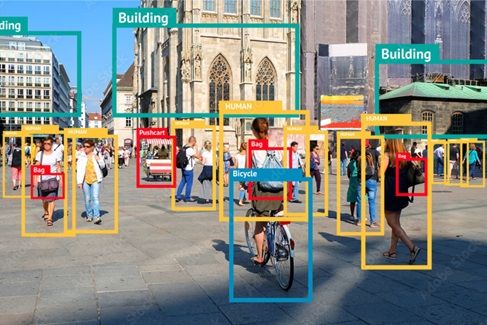 Beyond object identification, advanced systems generate behavioral metadata, which is particularly valuable for proactive security. These systems can detect patterns such as loitering, intrusion, tailgating, or the presence of unattended objects. In high-risk environments like airports, critical infrastructure, or public gatherings, such capabilities enable real-time alerts and faster response times. For example, a system can flag an abandoned bag within minutes or detect unusual crowd formation, allowing security personnel to intervene before a situation escalates.
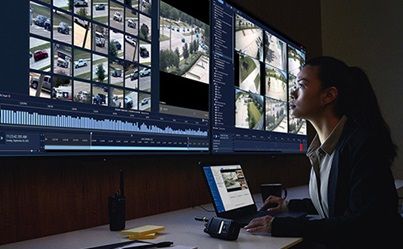
Another important dimension is event-based metadata, where specific triggers, such as motion detection, line crossing, or access control integration, create tagged events within the video timeline. This allows operators to navigate directly to moments of interest rather than reviewing continuous footage. When integrated with other systems like access control or alarm systems, metadata becomes a powerful tool for correlating events across platforms, creating a unified security view.
The role of metadata extends beyond security into operational intelligence. Retailers use it for footfall analysis and customer behavior insights. Airports and transport hubs leverage it for queue management and passenger flow optimization. Smart cities rely on metadata for traffic monitoring and urban planning. In these applications, video data becomes a strategic asset, driving efficiency and informed decision-making.
However, the increasing use of metadata also raises important privacy and regulatory considerations. Metadata can include sensitive information, especially when it involves facial recognition or behavioral profiling. Regulations such as data protection laws and surveillance guidelines require organizations to ensure responsible use, secure storage, and controlled access to both video and associated metadata. Transparency, consent (where applicable), and compliance frameworks are becoming critical components of any surveillance deployment.
From a technological standpoint, managing metadata presents its own challenges. The volume of metadata generated by large surveillance networks can be substantial, requiring robust storage, indexing, and processing capabilities. Cloud-based systems and edge computing are increasingly being adopted to handle this load efficiently. Edge devices, in particular, allow analytics to be performed closer to the camera, reducing bandwidth usage and enabling faster real-time decision-making.
 Another emerging trend is the use of open standards and interoperability frameworks to ensure that metadata generated by different devices and systems can be integrated seamlessly. Standards such as ONVIF have made significant progress in enabling compatibility, but the industry still faces challenges in achieving full interoperability, especially as analytics capabilities continue to evolve.
Looking ahead, the importance of metadata in video security systems will only grow. As artificial intelligence becomes more advanced, metadata will become richer, more contextual, and increasingly predictive. Systems will not only describe what is happening but also anticipate potential risks based on patterns and historical data. This shift from reactive surveillance to predictive security represents the next frontier for the industry.
In reality, metadata has transformed video surveillance from a passive recording mechanism into an active intelligence system. It enables faster investigations, real-time threat detection, and valuable operational insights. For organizations, the question is no longer about how many cameras they deploy, but how effectively they can harness the data those cameras generate. In this evolving landscape, metadata is not just an add-on, it is the backbone of modern video security systems and a key driver of their future potential.