

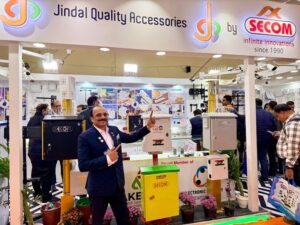
Dr. Sanjay Jindal began his career in 1988, after completing his B.E. degree and joining a CCTV company in North Delhi. In 1990, he ventured into entrepreneurship by establishing Kufra International, dealing in CCTV accessories such as camera housings, mounting kits, junction boxes and distribution boxes.
Through participation in industry exhibitions, he expanded his business, established an office in Karol Bagh, New Delhi, in 1994, and built an impressive dealer network across India by 1997. He was also among the early players to introduce matrix and remote switchers in 2001. In 2008, he further strengthened his manufacturing capabilities by commissioning a 5,000 sq. ft. factory, where he continues to develop innovative CCTV accessories. Dr Jindal interacted with SECURITY UPDATE to share his visions and beliefs.
What has been your biggest reason for the success of your entrepreneurial journey that you would like to share with our readers?
I have always believed that a client needs to be educated on what he actually needs. It is my duty to tell him what he needs. I have successfully managed to ensure that clients do not end up with unnecessary additions to their security systems. As a professional it is important to work on what is needed rather than just promoting our business. This has been my effort the last 30 plus years. And I have dedicated clients who know they can turn to me for advice any time.
My endeavour has always been to ensure that clients are never persuaded into investing in systems they do not genuinely need. I am happy to say that, over the years, we have earned the trust of our clients to the extent that they have complete confidence in our recommendations and know that we will deliver what is genuinely required to keep them secure.
Our approach is simple. We begin by engaging with the client, listening carefully to their concerns and understanding their business, its operations and specific security requirements. We then share the findings of our professional assessment, backed by our technical expertise and experience, and discuss the solutions that would best address their vulnerabilities.
Every sector has its own dynamics and risk profile. A shopping mall, a jewellery establishment and a real estate development, for instance, have very different security requirements. It is our responsibility as professionals to identify these vulnerabilities and help clients understand the risks they may otherwise overlook.
We believe in dialogue rather than imposing solutions. If a client needs time to consider our recommendations or discuss them internally, we encourage them to do so and return when they are ready. Our confidence comes from knowing that the value we bring lies not in selling more systems, but in recommending what is most appropriate for their security needs. Over time, our track record has ensured that clients recognise this value, appreciate our perspective and trust our professional judgement.
You emphasise that designing CCTV surveillance systems for the effective protection of assets is your core objective. You have done CCTV and integration projects yourself for a lot of customers, in your experience, what distinguishes a well-designed surveillance system from one that merely ticks off a compliance requirement?
It is important to assess the mindset of the supplier— that is us. My mindset and that of my entire team is 4D. The first D is decode. We have to understand what the client wants. Decode his needs and requirements. We don’t just have to install the system…we have to design the system for the client. Once that happens, we have the second D…Deliver. Then we have to deliver the system professionally. Then there is the third D…Doability. Which means it is our responsibility to ensure the system functions as required and as it has been designed for the complete year…even periodically checking if all is well. Then when one year is over we have to convince the client of the utility of an AMC and why it is essential in a security system. Here is the fourth D….Durability. We have to tell the client, irrespective of how big or professional his team is, they cannot do what we can do to install and maintain their systems.
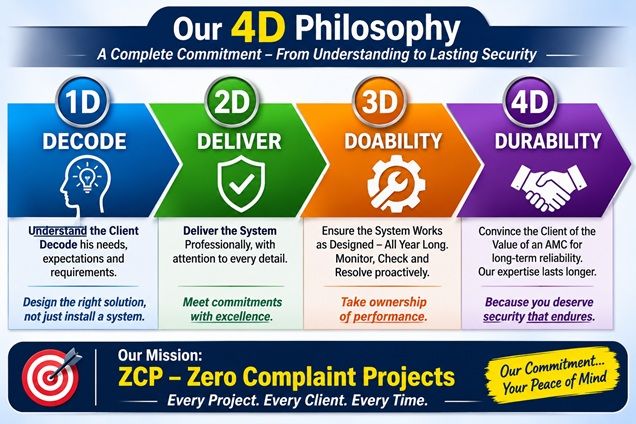 Just like the army gives names to its missions…like Operation Sindoor or others…my team also considers every task as a mission. And our mission is always the same..”Zero Complaint Projects”. It’s not that complaints will never come. They will come. But our mission project has to be ZCP…Zero Complaint Project. And that has been my motto from the start and is what has made the difference.
Looking back over more than three decades, how has the security systems industry evolved, and what have been the most significant technological and market changes?
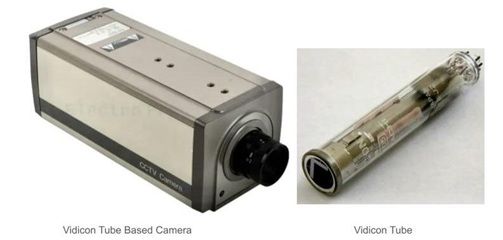 When I started my career in the CCTV industry in 1988, we were still using tube-based cameras. If you recall the old radios, some of them used to have glass vacuum tubes or valves that needed time to warm up before the radio became operational. The early CCTV cameras had a similar image pickup tube technology. I remember that when we switched on some of these cameras, it could take two to three minutes before they started displaying images.
Then came the solid-state CCD cameras, which brought a significant improvement in reliability, performance and image quality. Over time, analogue CCTV systems evolved, followed by the introduction and growing adoption of IP cameras. Today, we have entered an entirely new era with Artificial Intelligence (AI) and advanced video analytics.
AI has fundamentally transformed the role of a surveillance camera. It is no longer merely a device that captures images for someone to watch on a monitor. When integrated with intelligent video analytics, it becomes a much smarter security tool, capable of identifying specific events, interpreting situations and generating alerts based on predefined requirements.
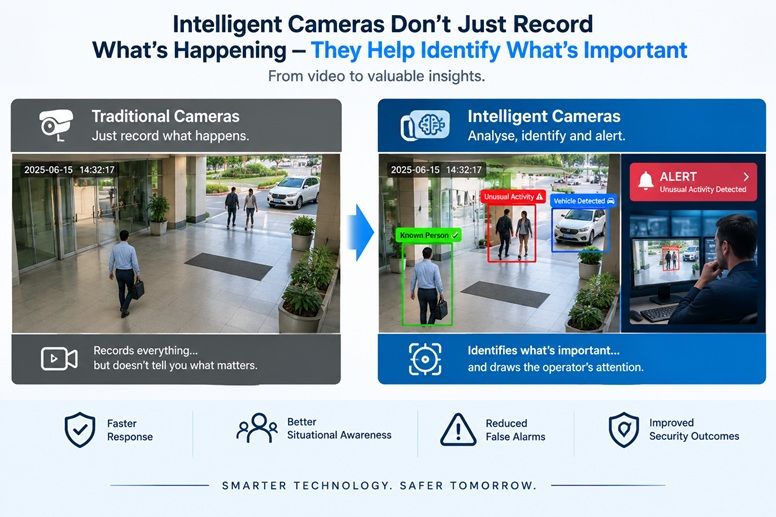 For instance, if you configure a camera system to detect abandoned baggage, it can identify an unattended bag that meets the configured detection criteria and alert the security team. Similarly, it can be configured to detect perimeter intrusion, unauthorised entry, crowding or other activities that require attention.
So, the camera is not simply recording what is happening; it can help identify what is important and draw the operator’s attention to it. Of course, the intelligence and effectiveness of the system depend on where the camera is installed, the purpose it is intended to serve, the analytics deployed and how well these are configured. Ultimately, it is about deploying the right technology for the right application.
That’s today’s smart camera. When we started the cameras recorded on a VCR to playback. As the requirements changed, technological development happened so evolution happened. And this evolution will continue as new technologies will come and cameras will become smarter and smarter.
You import, and also manufacture a lot of accessories used in the robust and efficient installation of CCTV systems. Tell us something about these products and how they benefit the system integrators and the end users? Is it easy to convince small and medium level system integrators to do qualitative installations?
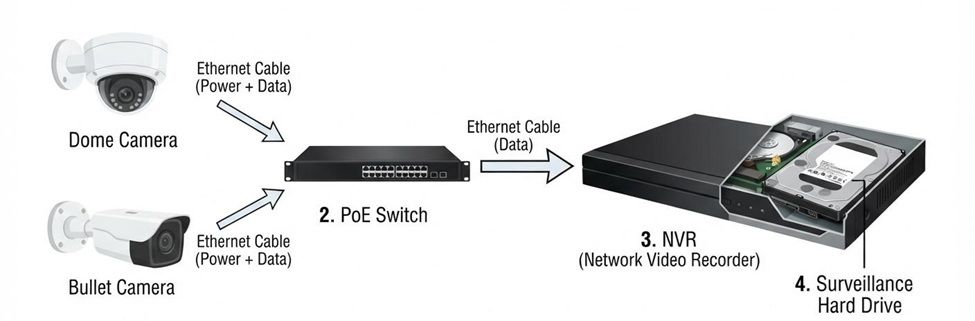 See, these days CCTV camera systems comprise of just 4 sub systems…the camera, hard disc, PoE switches and NVRs. In this segment, if good quality components are used, the complaint rate is very low, maybe five percent. The main complaints are always because of the supporting accessories that go into installation. Now we are one of those rare companies which gives equal importance to the 95 percent points where complaints can come. I had started concentrating on this a long time ago because I realised where it was possible the problems might arise.
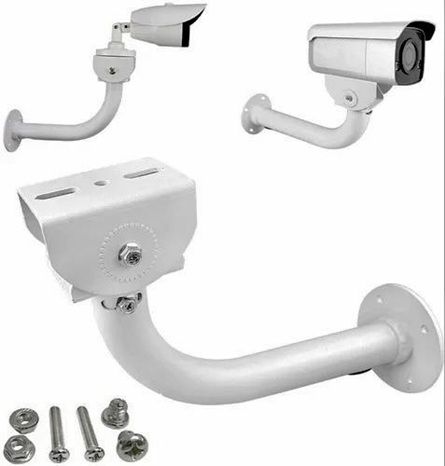 People fail to pay attention to small things…for example the camera housing, which differ from application to application. It depends on weather, sun, rain and so many factors. Housing protects the cameras in temperatures ranging from -20 degrees to 50 degrees. So they cannot be the same. I worked on that point very deeply and designed it in a way where the camera is unaffected by changing circumstances. Then there are connectors. Can you imagine that to protect the 4 parts that we mentioned earlier there may be 400 plus accessories that participate. So I concentrate equally on this aspect as well to achieve my Zero Complaint Project mission. And I am happy to say I have been successful to a large extent. The small integrators have problems in identifying these small problems. See when a complaint comes we need to quickly identify where the problem lies and quickly address it.
Having spent over 35 years building and leading your business, tell us about your team and what is your vision and plans for its next phase of growth?
I have been fortunate to build a team that is deeply committed to the organisation and shares my passion, values and approach to business. What makes this team special is that most of its members have been with me for decades. Over the years, they have come to understand how I think, how I approach challenges and how I make decisions.
One of the things I consciously practise is giving key team members a stake in the company. This creates a sense of ownership and responsibility. I want them to think like me, act like me and, in a sense, become different versions of me. When that happens, the organisation becomes less dependent on one individual and develops its own leadership strength.
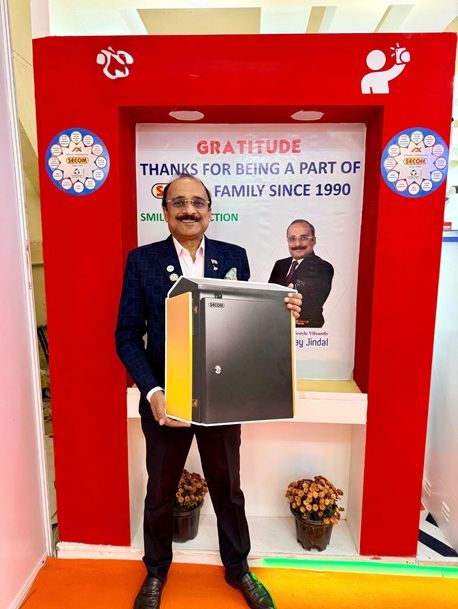 Today, I have seven department heads who largely think and operate the way I do. I don’t have to constantly guide or supervise them. In fact, when they encounter a problem, they first work out a possible solution and then come to me to validate it, rather than simply bringing me the problem. That, to me, is the real measure of leadership development and succession planning. I am building an organisation that can think, decide and move forward even in my absence.
As far as the next phase of growth is concerned, I have already started exploring a royalty-based business model. The idea is to identify specific market needs and requirements, develop complementary accessory products and allow these to be manufactured at different locations across the country under a royalty arrangement. This initiative is already moving from concept to implementation and offers an opportunity to create a scalable business without necessarily having to invest in manufacturing infrastructure at every location.
I also believe the industry itself is at an important crossroads. Today, it is increasingly marketing-driven and price-sensitive. Much of the focus is on attracting younger consumers through brand ambassadors, advertising and promotional campaigns. While marketing and brand building are important, I believe there is much more to be done if we are to take the industry to its next level.
We need to look beyond selling products and creating brands. We need to understand evolving consumer needs, develop meaningful innovations, explore new business models and create long-term value. The challenges ahead are significant, particularly in an increasingly competitive and marketing-led environment.
My vision for the next phase is therefore twofold: to build an organisation that is self-sustaining through empowered leadership, while simultaneously exploring new business models and opportunities that can take the industry forward. I believe the road ahead must be broad-based, innovative and driven by a longer-term vision rather than just immediate market opportunities.
Dr. Sanjay Jindal is Managing Director of S J Security Systems Pvt Ltd. & Proprietor, Kufra International