



Healthcare systems handle large volumes of patient data every day, and much of it flows across EHR platforms, medical devices, clinical apps, and physical facilities. This constant movement of sensitive information makes hospitals an attractive target for cybercriminals and a high-risk environment for insider access misuse.
The financial impact of a breach is also severe because even a single compromised account can expose thousands of patient records. According to the HIPAA Journal, the average cost of a healthcare data breach has fallen to 7.42 million dollars, highlighting how expensive access lapses can be for providers.
With clinicians, administrative staff, contractors, and third-party vendors accessing multiple systems throughout the day, healthcare organizations need strong and well-structured access control to protect patient data without disrupting clinical workflows.
Access control safeguards both digital and physical assets across hospitals and clinics by ensuring only authorized users can access sensitive resources.
- Electronic Health Records: Protects patient information by allowing clinicians to view only the records relevant to their role while blocking unauthorized access.
- Clinical Applications: Limits access to diagnostic tools, imaging systems, scheduling platforms, and pharmacy applications based on user responsibilities.
- Connected Medical Devices: Prevents unauthorized interaction with network-connected devices, reducing risks of tampering, data exposure, or device malfunction.
- Physical Spaces such as Labs, Pharmacies, and Data Centers: Controls entry into restricted areas that store medications, lab samples, high-value equipment, and critical IT infrastructure.
Understanding the specific concerns and vulnerabilities of a facility is critical to properly securing it, and that process begins with examining the various types of spaces one may encounter in a medical setting. Healthcare spaces can vary significantly in shape, size, and purpose: for example, a hospice center or nursing home may have considerably different needs than an urgent care facility or hospital.
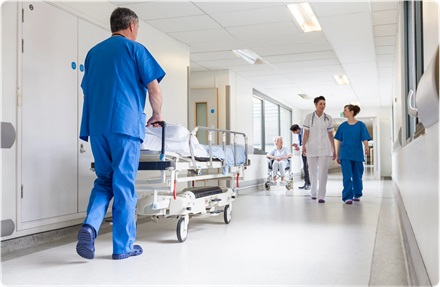 A space many healthcare facilities share is the waiting room: an area open to the public where incoming patients and visitors can first enter and access the services provided. Waiting rooms pose a unique challenge for security providers, as they must balance security with a welcoming environment.
Other common areas in medical facilities include storage spaces, where critical care resources are kept. This can range from pharmaceuticals to critical medical instruments and devices. To protect important and costly resources, access to these storage spaces must be limited to authorized individuals only. Furthermore, as spaces that store highly regulated substances, pharmacies in particular must meet a range of security and auditing requirements set out by the Drug Supply Chain Security Act (DSCSA).
Server rooms, IT closets, and medical record storage spaces are additional areas that need to be strictly secured in healthcare facilities. If access is not limited to authorized personnel, healthcare spaces pose a risk of data leaks and critical medical, personal, and financial information falling into the wrong hands.
Additionally, the proper management and protection of patient records are mandated by the Health Insurance Portability and Accountability Act (HIPAA), so protecting spaces that house this sensitive information is necessary.
Lastly, there are the areas where actual medical services are provided: operating rooms, neonatal intensive care units, emergency rooms, obstetrics rooms, and more. Due to the sensitive nature of procedures in these areas, facilities must ensure that access is carefully monitored and restricted to authorized personnel only. Unauthorized visitors entering these spaces could result in serious issues, such as theft, equipment damage, or interrupted medical procedures.
In a critical space such as a healthcare facility, it’s imperative that security systems cover all angles, both proactive and reactive strategies. Security devices can often be divided into two categories: ‘proactive’ solutions that attempt to prevent security incidents from happening in the first place, and ‘reactive’ solutions that help organizations respond to a security incident after, or while, it takes place. Rather than relying on one or the other, healthcare organizations benefit most from a unified approach that combines proactive and reactive security.
 As a technology that allows users to control and monitor entry and egress within their space, access control is traditionally a proactive solution; it seeks to prevent unauthorized entry and actions in the first place. Alternatively, a solution such as a video management system (VMS) is often viewed as a reactive tool, since it can provide critical video footage to help security staff address an incident after it has occurred. By using these technologies in unison, security teams can have a well-rounded approach to managing their property.
For example, a healthcare facility may have access control in place for a room where patient records are stored. If a former employee attempted to enter that space using their old, deactivated credential, the access control system would record the denied entry event and notify security staff promptly. And when integrated with a video management tool, that access event can be paired directly with corresponding video footage, allowing security staff to review the situation and determine exactly what happened, no guesswork or reliance on eyewitness statements.
Operational efficiency is critical in healthcare, in some medical spaces, lost minutes can lead to lost lives. Because of this, security mechanisms shouldn’t create any kind of complications or roadblocks that could threaten the operational efficiency of space.
When it comes to physical security efficiency, one of the largest conversations today is about the value of mobile credentials. Mobile credentials are digital keys that allow users to access a secure space using their personal mobile device. These credentials can replace physical credentials – cards, key fobs, stickers, wristbands, etc. – which are typically at risk of being stolen, duplicated, lost, or forgotten.
By incorporating mobile credentials, healthcare professionals don’t need to worry about remembering or tracking down physical credentials, something that can seriously slow them down in urgent situations.
System downtimes and power losses are also important considerations. In the event of a power loss or network error, healthcare spaces should use protection systems with backup UPS to keep operating during outages and till power is restored.
It is critical to secure any space in a medical facility that contains information technology, data storage, or sensitive records. Weak physical access control systems can enable external and internal actors to access a critical space without proper authorization, allowing them to view, distribute, or tamper with sensitive information, all of which would directly violate HIPAA requirements. This is an issue that many healthcare spaces throughout the United States have faced in recent years.
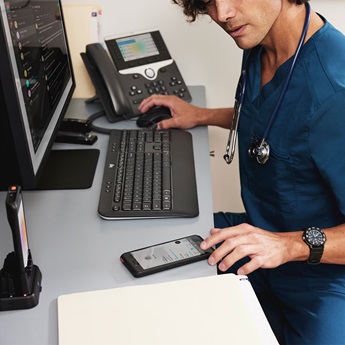 In its 2024 Data Breach Investigations Report, Verizon identified 1,367 digital security incidents in healthcare facilities. Of those 1,367 incidents, an estimated 70% resulted from internal threats, actions taken by healthcare employees that directly resulted in the improper distribution of information.
Therefore, to protect employee and patient information, the first step is to implement a reliable access control solution that creates a physical barrier to areas where sensitive information is stored.
Healthcare access control is moving toward more adaptive and intelligence-driven models. Artificial intelligence and context-aware decision engines can analyze behavior patterns, location, device health, and workflow context to adjust permissions in real time. This helps prevent unauthorized access without slowing down care delivery.
As distributed care continues to expand, healthcare organizations will rely more heavily on secure cloud platforms, connected medical devices, and remote workforces. These changes require more granular and flexible access frameworks that protect patients and data wherever care is delivered. Emerging technologies such as attribute-based access control, decentralized identity models, and advanced device attestation will support access decisions that extend well beyond the walls of the hospital.
To protect patients, volunteers, staff, and resources in a healthcare facility, security administrators need a reliable system that enables them to consistently control and monitor physical access.
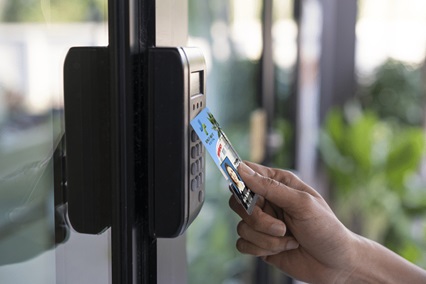 Furthermore, by implementing an access control system that integrates with third-party technologies, such as video management systems, healthcare facilities can adopt a security strategy that not only helps prevent security incidents but also empowers security personnel to respond effectively in the rare event that they do occur. By adopting an integrated access control approach, healthcare providers can rest assured they will continue to deliver their critical services without disruption.
Modern healthcare access control requires a coordinated approach that protects both the physical environment and the digital systems that support patient care. Strong identity governance, least-privilege access, reliable authentication, and thoughtful segmentation form the foundation of an effective strategy.
Continuous monitoring, regular access reviews, and the adoption of emerging technologies help organizations stay ahead of evolving threats and compliance demands. By making access control a core security priority, healthcare leaders can strengthen patient privacy, safeguard staff and facilities, and build a resilient operational environment that supports safe and efficient care.
With inputs from Prodatakey