

Here’s something most people in security already know but rarely say out loud: a camera that nobody’s watching isn’t really doing much. For years, that’s exactly what traditional video surveillance amounted to: hours of footage, dozens of feeds, and a small team of people who physically could not keep up with it all. Events got missed. Incidents got reviewed after the fact. The footage existed, but it wasn’t really working. That’s the gap intelligent video analytics fills.
It’s not magic, and it’s not new in concept, but the technology has genuinely matured to the point where physical security systems can now automatically spot what matters, flag it immediately, and let human operators focus on responding rather than searching.
Old-school video surveillance analytics had real limitations: alarm fatigue, missed detections, and a near-total reliance on someone being alert enough to notice something wrong on a monitor. AI video analytics handles a lot of that automatically now.
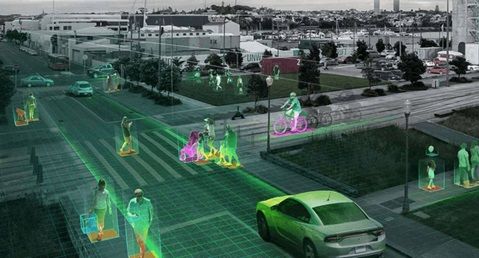 Intelligent video analytics is software that monitors video so your team doesn’t have to watch it all. It analyses footage live or recorded and picks out the things that actually matter: people where they shouldn’t be, objects left unattended, vehicles behaving oddly, doors accessed at 3 a.m. The engine behind this is computer vision technology, which uses machine learning models trained on enormous image datasets to recognise and classify what’s in a frame. A person. A car. A bag. A crowd. The system doesn’t just see pixels; it understands categories and context, which is what makes it useful for physical security systems rather than just being a fancier DVR.
What separates modern intelligent video analytics from the clunky rule-based systems of a decade ago is flexibility. Today’s platforms run on edge hardware, in the cloud, or both. They don’t need expensive bespoke infrastructure. A warehouse with 40 cameras and a hospital with 400 can both use the same underlying AI video analytics platform, configured differently for each environment.
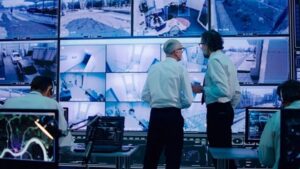
The real shift, and it’s worth being direct about this, is that intelligent video analytics turns cameras from passive recorders into something closer to active sensors. By pairing intelligent video monitoring tools with security operations centers, teams get a live picture of what’s happening rather than a library of footage to scroll through afterward. That’s a genuinely different way of running security.
Intelligent video analytics doesn’t just “analyze video.” There’s a sequence to it, and understanding that sequence helps explain why it catches things a human monitor probably wouldn’t.
Taking In the Video Feed
Cameras push live streams or stored recordings into the analytics engine. Before anything else, the system normalizes the footage: adjusting for low light, camera frame rate differences, and resolution variations. It’s the equivalent of making sure you can actually see clearly before you start looking for something.
Finding and Labeling Objects
This is where object detection technology does its work. The system scans each frame and draws a box around anything it identifies: a person, a vehicle, a package, an animal. Every detection comes with a confidence score. High confidence: person near the north entrance.
Watching How Things Move
Detection alone isn’t enough. Behavior analysis is what turns a detected person into a potential threat or confirms they’re just walking to their car. Is someone pacing near a restricted entrance? Has a vehicle made three slow passes around a building perimeter? Has a bag been sitting unattended on a platform for six minutes? These behavioral patterns get flagged when they match defined rules or deviate from learned baselines for that specific location.
Sending the Alert
When something triggers a rule, real-time threat detection kicks in. An alert goes out timestamped, clipped, categorized through video management software or whatever incident platform the team uses. This usually happens in seconds, not minutes.
Getting Smarter Over Time
Modern intelligent video analytics systems learn. The models update based on what they encounter at a specific site, so detection accuracy tends to improve over the first few months of deployment as the system is calibrated to the local environment, lighting patterns, regular traffic, seasonal changes, and so on.
Modern video analytics do a lot more than record and store footage. They watch, interpret, and flag unusual behavior, tracking movement patterns and alerting teams to problems as they unfold, not hours later when someone finally reviews the tape.
Intrusion Detection
 Intrusion detection systems built on intelligent video analytics can cover a lot of ground, literally. Virtual tripwires, restricted zone boundaries, perimeter lines: the moment someone crosses them, the system responds. What makes video analytics for intruder detection actually worth using, compared to old motion sensors, is that it understands context. A fox running through a loading dock at night is not the same event as a person climbing a fence. Legacy systems couldn’t tell the difference. This can.
Object Detection and People Tracking
Object detection technology allows the system to track people across multiple cameras without anyone manually switching feeds. If someone enters through the east door and heads toward a server room, the system tracks them across every camera in that path. Unattended bags, abandoned equipment, packages left in odd places these get flagged too. In busy environments like airports or university campuses, this kind of continuous tracking would be impossible to do manually. That’s kind of the point.
Unauthorized Access Detection
Physical security systems put a lot of faith in access cards and PINs. But someone tailgating through a secured door following a legitimate employee in without badging bypasses all of that. Intelligent video analytics can catch it visually. It can also flag someone attempting access outside of permitted hours, or detect when a credential is used somewhere that doesn’t match the person it was issued to, by cross-referencing with facial recognition where that’s legally permitted.
False Alarm Reduction
This one gets underrated. False alarm reduction might not sound exciting, but in practice it’s one of the biggest reasons security teams actually trust and use intelligent video analytics rather than eventually tuning it out. Traditional motion detection is indiscriminate; it fires on headlights, shadows, birds, rain. Operators are starting to ignore alerts because most of them don’t mean anything. AI video analytics applies enough reasoning to understand that a tree moving in the wind isn’t worth waking someone up at 2 a.m. Fewer alerts means the real ones get taken seriously. Automated security monitoring only works if people believe the alerts it sends.
 Benefits of Intelligent Video Analytics for Physical Security Operations
The honest benefit? Your team can cover more ground without burning out or missing things. Fewer false alarms, faster responses, and less time spent scrubbing through hours of uneventful footage it’s not glamorous, but that’s exactly what makes it valuable.
Responding Faster, Not Just Reacting
When automated security monitoring handles detection, the security team isn’t searching through footage after the fact; they’re already aware before it gets worse. Operators can pull up a visual confirmation on screen before dispatching anyone, so they’re not sending a guard to investigate a shadow.
Seeing the Whole Site at Once
AI-driven video intelligence pulls together feeds from dozens, sometimes hundreds of cameras and surfaces what matters. One operator can maintain genuine awareness across a 50-camera system in a way that wasn’t realistic before. That’s not hyperbole. Manual monitoring at that scale just doesn’t work well; too many feeds, too much footage, too many moments where attention drifts.
Catching Things Before They Become Incidents
Most security incidents don’t just happen out of nowhere. There are usually precursors: someone casing a location, a vehicle making repeated loops, unusual loitering near an access point. Intelligent video analytics picks up on those patterns. Security teams that catch the precursor can intervene. Teams that don’t catch it are dealing with the incident report afterward.
Covering More Ground Without Hiring More People
This is a real operational consideration. AI-driven video intelligence doesn’t replace security staff, but it does mean a smaller team can realistically cover a larger environment. That’s relevant for any organization managing tight budgets while trying to maintain proper coverage across growing facilities.
Building a Proper Evidence Trail
Every flagged event, timestamped clip, alert log, and object track is stored automatically. When incidents happen, investigations go faster. Insurance claims are easier to support. Compliance documentation doesn’t require manually pulling footage. Intelligent video analytics generates that record as a byproduct of doing its job.
A lot of deployments underperform not because the technology is bad, but because the setup was rushed. Camera angles matter. So does integration with your existing systems, staff training, and having a clear policy around data retention. Get those things right first, and the rest tends to follow.
Get the Cameras Right First
Intelligent video analytics can only work with the footage it gets. A poorly placed camera with bad lighting will produce bad detections regardless of how good the software is. Before touching any configuration, figure out where cameras need to be, what angles they need to cover, and whether lighting is adequate, especially at night.
Write Detection Rules That Actually Match Your Environment
 Generic default settings are a starting point, not a solution. A detection zone that covers too much area generates constant noise. One that’s too narrow misses events. Work with your vendor to dial this in for your specific site and revisit those rules after the first few weeks of live operation, because reality rarely matches expectations perfectly.
Check What Privacy Law Says in Your Jurisdiction
AI-powered video analytics is regulated differently depending on where you are. Some regions require consent notices, data minimization, or restrictions on facial recognition. Don’t assume what’s permitted; get proper advice before deployment, document your legal basis, and build in anonymization where required.
Connect It to Everything Else
Intelligent video analytics is less useful in isolation than when it’s integrated with video management software, access control, and incident response systems. A camera that detects a breach but can’t automatically link to a door lock event or an access log is leaving value on the table. Integration is where the situational awareness actually comes together.
Detection accuracy drifts without attention. Seasonal changes affect lighting. New construction changes sightlines. Staff change and alert routing needs updating. Plan regular reviews at least monthly early on, and treat ongoing calibration as part of the job, not an optional extra.
To sum up, traditional video surveillance has always been a bit of an illusion of security. The cameras were there, the footage was being recorded, but whether anyone was actually watching and whether they caught the right thing was never guaranteed. Intelligent video analytics makes the monitoring part real. Real-time threat detection that actually detects. False alarm reduction that earns back operator trust.
Behavioral patterns caught before they turn into incidents. Intelligent video analytics doesn’t change what cameras can see; it changes what gets done with what they see. It’s not a simple system to deploy well, and it’s not cheap. But for organizations managing meaningful physical security risk, the question isn’t really whether intelligent video analytics makes sense. It’s about implementing it in a way that actually delivers on its capabilities.