

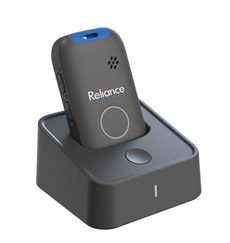
In response to the UK’s upcoming phased termination of the 2G network, Reliance Protect has introduced its latest 4G lone worker safety key fob device named Pulse+. This device is one of the pioneering solutions supporting full Voice Over Long Term Evolution (VoLTE) communications across multiple networks. It ensures that both voice calls and alarm transmissions can be fully supported by the 4G infrastructure.
The UK’s mobile network landscape is experiencing its most significant overhaul in decades, with 2G services slated for decommissioning following the near-complete shutdown of 3G. For sectors including health, social care, social housing, and transport, this transition poses a challenge. These industries, which depend heavily on safety technology for lone and frontline workers, must ensure ongoing device connectivity, compliance, and effective emergency support provision.
Chris Allcard, a director at Reliance Protect, emphasizes the necessity for preparedness among organisations that depend on lone worker devices. He states, “Network providers are now actively working through plans to decommission the older 2G technologies to free up bandwidth and support the huge increase in connected devices we rely on every day, from smart infrastructure through to vehicles and IoT technology. Organisations using lone worker devices need to prepare now for these changes.”
The UK Government plans to phase out 2G services by 2033, with network operators possibly completing this transition earlier. Currently, over half a million lone worker devices in the UK still utilise the 2G network for crucial voice calls and alarm signals. However, 2G’s inability to meet current demands for connectivity and data insights necessitates a shift to more advanced systems.
Reliance Protect is striving to eliminate dependence on outdated 2G networks through its new technologies. It is crucial to acknowledge that many 4G devices on the market still require 2G for voice communication, posing a risk.
The VoLTE-enabled devices from Reliance Protect allow for alarms, voice communication, and data sharing to operate concurrently over the 4G network. Allcard further comments, “A lot of devices currently marketed as 4G still rely on 2G infrastructure for voice functionality, which doesn’t actually remove the 2G connectivity risk. We wanted to create a genuinely future-proof platform that customers could rely on for at least the next five to ten years.”
The Pulse+ device, developed alongside the 4G VoLTE ID+ discreet ID badge, boasts faster alarm activation and response times. It simultaneously transmits voice calls, GPS, WiFi locations, and incident data.
Additionally, the platform supports advanced data collection, enabling potential integration with external sensors, such as those for monitoring heart rate and body temperature. At present, Reliance Protect processes over five million data entries each day, including metrics on network performance and coverage.
Designed with long-term procurement strategies in mind, the new 4G devices are priced comparably to Reliance Protect’s existing 2G models. This pricing strategy enables organisations to future-proof their lone worker safety solutions without incurring substantial additional expenses.