

Artificial intelligence, advanced sensor technologies and immersive simulation are opening new possibilities for law enforcement and public security agencies. Fraunhofer-Gesellschaft will present new internal security solutions at the GPEC General Police Equipment Exhibitions & Conference in Leipzig. These will include technologies for analysing digital evidence, identifying threats at an early stage and training personnel in realistic environments.
On all three days of the exhibition, researchers will offer short presentations and live demonstrations, providing insights into specific applications and current research. Visitors will have the opportunity to engage directly with researchers and discuss specific use cases for these technologies in law enforcement and public security.
The Fraunhofer Institute for Computer Graphics Research IGD will showcase application-ready technologies designed to help law enforcement and public security agencies accelerate investigations, improve situational assessments and support decision-making in complex operational scenarios.
For example, the institute will demonstrate Cultarm 3D, a solution for the standardised 3D digitisation of evidence developed in cooperation with the spin-off Verus Digital GmbH. Physical evidence is captured in precise 3D models using a fully automated, contactless process that delivers high measurement accuracy and reliable color fidelity. The results can be used in court proceedings, stored in structured archives and examined from any location.
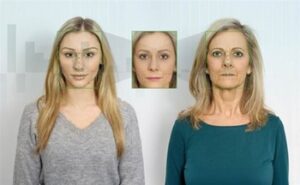
Additional technologies support enhanced identity verification and suspect identification: Techniques for detecting face morphing attacks can identify manipulated ID photos, while AI-based methods enable real-time identification of individuals in crowds and support situational assessments during large-scale incidents.
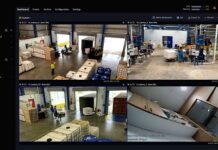
Fraunhofer IGD will also present an event camera with exceptionally fast response times for identifying drones and other objects. Interactive tools for analysing cyber and network data process large volumes of data visually, helping analysts recognise anomalies more quickly.
The institute will also demonstrate the Next Reality platform, a training environment for security personnel. The 5D simulation tool combines virtual reality with real-world effects to replicate highly realistic training scenarios such as emergency helicopter landings on water.
The Fraunhofer Institute for Digital Media Technology IDMT will present its Audio Forensic Toolbox, a set of tools for analysing media content. Investigative authorities and public security agencies can use this to detect manipulation and artificial content, analyze reuse and dissemination patterns and actively authenticate recordings.
In addition to identifying anomalies and distribution patterns, the toolbox supports forensically sound assessments and verifications of the authenticity, provenance and evidentiary value of recordings.
The Fraunhofer Institute for Secure Information Technology SIT will present technologies for analyzing digital evidence and supporting investigations in the digital domain. These include text forensics systems that can distinguish between AI-generated and human-authored texts.
The institute will also demonstrate methods for identifying CSAM (child sexual abuse materials). These analytical tools help authorities analyse large volumes of data more efficiently, identify suspicious content more quickly and systematically preserve digital evidence.
The Fraunhofer Institute for Optronics, System Technologies and Image Exploitation IOSB will present technologies for assessing digital image content and detecting drones.
Realorrender combines deep learning classification with a method that evaluates how well an image can be reconstructed using a generative model. This significantly improves the ability to determine whether an image is authentic or AI-generated. Explainable AI processes also help users to understand how the system formed its assessment.
The institute will also demonstrate Modeas, a system that uses video sensors to detect and classify drones and offers the option of integrating additional sensors such as radar. The captured data is fused into an integrated 2D and 3D visualisation, enabling frontline personnel to quickly and reliably assess and document potential threats.