

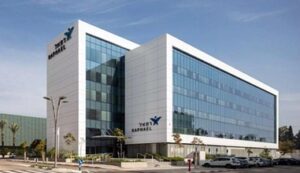
In an era where technological advancements intertwine with healthcare, Raphael Hospital in Tel Aviv stands at the forefront of combining state-of-the-art medical care with cutting-edge security measures.
Opened recently, this private hospital is among Israel’s most advanced medical institutions, attracting over 50,000 medical tourists each year according to the Ministry of Health. Such a standing demands robust systems to ensure both patient care and security.
Designed with insights from global experts, Raphael Hospital prioritises advanced technology alongside premium medical care. It is staffed by senior doctors with extensive expertise across various specialisations.
The hospital’s infrastructure even includes tiles with an integrated antibacterial shield providing constant protection against bacteria. This focus on innovation extends to ensuring patients’ psychological and physical well-being, with facilities designed to offer a luxury-hotel-like experience, while also ensuring optimum medical care and safety.
The nature of hospitals makes them soft targets, a potential risk due to their large, often crowded spaces with multiple access points. Thus, enhancing security is a critical component of hospital management.
Raphael Hospital addresses these vulnerabilities by integrating sophisticated medical and surgical technologies, such as the Mako robotic arm-assisted system and the Da Vinci robotic surgical system, for efficient and safe surgical procedures.
Recognising the need for stringent security in the highly sensitive areas of a hospital, especially where complex surgeries are carried out, Raphael Hospital implemented advanced control systems from inception.
The importance of touch-free environments was magnified by COVID-19, necessitating technology that allows minimal contact and maximised hygiene. Raphael Cohen, Operating Room Manager, notes the importance of building a “most updated hospital” with these protocols.
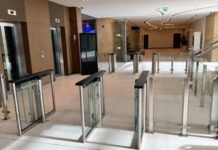
Security at Raphael Hospital is further enhanced through the integration of facial recognition-based technology. This development not only secures patients and valuable hospital assets but also contributes significantly to infection control by limiting contact with surfaces. Oosto’s OnAccess solution enables seamless access for staff, enhancing the sense of belonging for employees recognised by the system. According to Cohen, the technology ensures that access to sensitive areas is restricted to authorised personnel, thereby maintaining the integrity of the hospital’s sanitary protocols.
The adoption of facial recognition systems redefines efficiency for hospital operations. By providing frictionless access, these systems minimise contamination risks and unauthorised entry, reinforcing the hospital’s reputation for cutting-edge healthcare. At Raphael Hospital, Oosto’s technology exemplifies a commitment to innovation in both patient care and security.