


Videonetics is redefining video surveillance in India, moving beyond traditional metrics such as camera count and detection speed to focus on understanding context and ensuring reliability in challenging environments.
As video systems evolve from simple object recognition to contextual understanding, reliability in unpredictable conditions—such as monsoon rain and uneven infrastructure—becomes crucial. Tuhin Bose, Senior Vice President and CTO at Videonetics, highlights the necessity of engineering for context-aware artificial intelligence (AI) that blends explainability, resilience, and comprehensive lifecycle management.
Bose explains that “True AI” isn’t just another buzzword in deep learning but a system that combines spatial, temporal, and behavioural intelligence. Unlike conventional systems that recognise objects, context-aware AI models comprehend scene dynamics and distinguish between normal and exceptional behaviours. By integrating this intelligence, these models generate actionable insights rather than simply relying on predefined rules to trigger alerts.
For instance, a traditional analytics system may trigger an alert when a crowd reaches a certain size. A context-aware model, however, assesses behavioural patterns, identifies unusual clustering, and suggests preventive measures before such gatherings become a safety issue. This fundamental difference allows Videonetics to interpret scenes, detect anomalies, and adapt to changing environments while ensuring transparency and accountability, key for building trust in AI-driven insights.
India presents unique challenges for computer vision due to fluctuating light, dust, and unpredictable crowd density. Videonetics emphasises optimising for consistent performance in chaotic real-world conditions over achieving peak accuracy under ideal circumstances.
The engineering approach involves stabilising video streams and mitigating distortions before analysis, training models on varied datasets to handle imperfect conditions, and using post-processing to refine results and minimise false alarms.
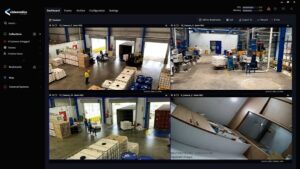
The Videonetics Unified Video Management System supports integrated AI analytics, ensuring data is understood within a broader operational context rather than as isolated incidents. This system balances edge processing with centralised analytics, improving efficiency, reducing false positives, and enhancing return on investment for AI deployments.
A notable implementation is in Andhra Pradesh, where the platform manages 15,000 cameras across 28 districts, demonstrating resilience across various infrastructural settings.
With a focus on explainability due to regulatory demands such as the RBI’s data localisation mandates, Videonetics incorporates this aspect into the architectural design from the onset.
The system’s audit-readiness combines data governance strategies with comprehensive event records, ensuring compliance while maintaining transparency. While complex models can improve accuracy, maintaining balance with interpretability is vital for consistent business outcomes and regulatory compliance.
Videonetics employs a disciplined engineering process for lifecycle management across extensive deployments. AI models are continuously refined and validated against real-world data to maintain accuracy and reliability without excessive manual intervention. This approach ensures the platform’s adaptability to dynamic conditions, allowing consistent enhancement without disrupting ongoing operations.
As AI-powered video intelligence becomes integral to operational decision-making, Videonetics is enhancing system resilience against tampering and adversarial attacks. By embedding security into the system architecture from the start, the company aims to ensure AI models are robust in varied, real-world scenarios. This comprehensive security approach reinforces trust in AI insights as technology integration scales across complex environments.
Engineering for India’s diverse conditions has spurred innovations that make Videonetics competitive internationally. The adaptability developed for India—such as generalising AI models across diverse scenarios without extensive tuning and integrating these systems with various technologies—provides an advantage in global markets facing similar challenges.
The industry is transitioning from isolated video event analysis to “semantic convergence,” where video data is correlated across systems using natural language processing. This shift, enabled by advances in multimodal and generative AI, allows organisations to derive contextual insights from multiple systems, enhancing decision-making efficiency. However, infrastructure integration remains a challenge that needs addressing for seamless interoperability and data movement across platforms.
While edge-ready AI and distributed inference are nearing broader deployment, Videonetics is also focusing on developing multimodal intelligence that integrates data from various sources. This advancement aims to provide a comprehensive understanding of operational contexts, steering video intelligence beyond mere surveillance toward true operational insights, as the company continues its research and development efforts.