



In an age of rising passenger volumes, evolving threat vectors, and increasingly sophisticated concealment techniques, high-quality X-Ray Baggage Inspection Systems (XBIS) have become a non-negotiable layer of aviation security. Airports serve as national gateways, and any lapse in screening, whether due to poor image clarity, slow throughput, or outdated detection algorithms, can create vulnerabilities with far-reaching consequences. Modern, high-resolution, dual-view and AI-enabled XBIS technology not only strengthens the detection of weapons, explosives, and contraband but also enhances operational efficiency, reduces false alarms, and builds traveller confidence. Simply put, robust baggage screening is the first and most critical firewall protecting the integrity of every airport.
Delhi’s Indira Gandhi International Airport (IGIA) has reopened its upgraded Terminal 2 (T2), inaugurated by Civil Aviation Minister K. Rammohan Naidu recently, marking a new chapter in the airport’s modernization journey. The terminal, which was originally opened forty years ago, has recently been completely reconstructed with the ultimate goal of offering more seamless, faster, and tech-savvy passenger experiences than ever before.
The facelift includes a host of next-generation upgrades from Self-Baggage Drop (SBD) counters and Virtual Information Desks to autonomous passenger boarding bridges and enhanced facilities for persons with reduced mobility (PRM). Alongside these passenger-focused enhancements, the security infrastructure at T2 has also been completely modernized to meet the demands of increasing footfall and evolving aviation security standards.
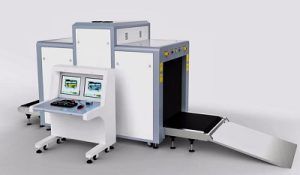 As part of this revamp, the homegrown security solutions provider Vehant Technologies has deployed 18 advanced Kritiscan Dual-View X-Ray Baggage Inspection Systems (XBIS) across the terminal. These cutting-edge systems are made and developed in India under the ‘Make in India’ program and are capable of providing high-resolution, dual-view imagery for quicker and more efficient baggage screening.
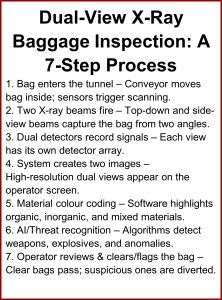 A Dual-View X-Ray Baggage Inspection System (XBIS) is an advanced security screening machine that uses two independent X-ray generators and detectors to scan baggage simultaneously from two different angles—typically top-down (vertical view) and side view (horizontal view).
This dual-angle imaging provides security operators with two complementary perspectives, greatly improving the ability to detect concealed weapons, explosives, contraband, IED components, narcotics, currency, or dense organic/inorganic materials.
In simple terms a Dual-View XBIS works like having two X-ray cameras cross-examining the same bag at once, ensuring nothing dangerous remains hidden behind other objects.
The recently commissioned Dual-View XBIS systems at Terminal 2 allow security personnel to X-ray baggage from two completely different views at the same time, greatly minimizing blind spots and maximizing the identification of prohibited items.
This proven technology helps security checks to continue being comprehensive and effective without hindering the movement of passengers, an important factor as T2 reopens with more than 120 domestic flights daily. By enabling the CISF and airport security personnel to carry out more detailed checks without long queues, the system is an important contributor to ensuring the high passenger volume characteristic of IGI Airport’s busy terminals.
Vehant Technologies’ early delivery and installation ensured the security infrastructure of the terminal was in place much in advance of its operational inauguration. The deployment at T2 also aligns with the company’s vision of integrating AI-driven security technologies across critical infrastructure nationwide.
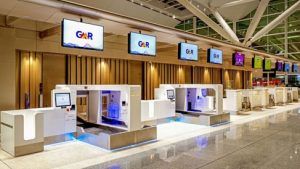 Notably, Vehant Technologies’ systems are already operational at Terminal 1 (T1) of the IGI Airport, a testament to the company’s continued partnership with India’s busiest airport and its commitment to safeguarding millions of travellers each year.
 “The revamp of Delhi Airport’s Terminal 2 represents a significant step forward for India’s aviation infrastructure, where security technology is playing an increasingly key role in shaping passenger experience,” said Kapil Bardeja, Co-Founder & CEO of Vehant Technologies.
“We have deployed 18 advanced Kritiscan Dual-View X-Ray Baggage Inspection Systems (XBIS) across the terminal. These cutting-edge systems are made and developed in India under the ‘Make in India’ program and are capable of providing high-resolution, dual-view imagery for quicker and more efficient baggage screening. Aviation security today demands intelligent, adaptive solutions that can process high passenger volumes without compromising safety,” Kapil Bardeja said.
 “Our Dual-View XBIS systems are specifically created to counter precisely, giving security personnel quicker, sharper insights, as well as enhancing the overall passenger experience. What makes this success of even greater importance is that these technologies are entirely designed, engineered, and manufactured in the country. The strength of India’s technological self-reliance is not just enhanced, but also the indigenous innovation’s ability to meet international aviation security standards is demonstrated through this technology. We are very pleased to help one of the world’s busiest airports in terms of safety infrastructure and government vision for a secure, efficient, and self-sufficient India.”
“With the activation of Terminal 2 with over 120 domestic flights per day, passengers can have a better travel experience with smoother, safer, and more comfortable journeys,” he added.
As airports grapple with rising passenger loads, evolving threat profiles, and the unrelenting demand for operational efficiency, investing in smarter X-ray systems is no longer a technological upgrade, it is a security imperative. Modern dual-view, multi-energy and AI-enabled XBIS platforms give security teams the tools they need to detect threats more accurately, process travellers faster, and maintain the highest levels of safety without compromising the passenger experience. In an era where a single lapse can have far-reaching national and economic consequences, the adoption of advanced screening systems represents a proactive commitment to protecting people, assets and reputations. Simply put, safer airports begin with smarter eyes at every checkpoint.