


On 22 May 2017, a suicide bomber detonated a homemade shrapnel device in the public foyer of Manchester Arena, close to Victoria Station in Manchester, England. The attack took place as thousands of people were leaving an Ariana Grande concert. Twenty-two people were killed and more than 1,000 people subsequently reported physical or psychological injuries. Many of those killed and injured were children and young people.
It was the deadliest terrorist attack in the United Kingdom since the 7 July 2005 London bombings. The perpetrator was identified as Salman Abedi, a 22-year-old British citizen of Libyan heritage, who detonated the device concealed in a backpack. He was killed in the explosion.
The attack also prompted a detailed examination of the security and emergency response arrangements surrounding the venue. The statutory public inquiry, chaired by Sir John Saunders, examined what happened before, during and after the attack and identified shortcomings relating to security arrangements, intelligence and emergency preparedness.
The Manchester Arena attack subsequently became a catalyst for a wider debate in the UK about the responsibilities of organisations operating publicly accessible premises and events, and their preparedness for terrorist attacks. One of the most significant outcomes of that campaign has been the introduction of what is commonly known as Martyn’s Law.
Martyn’s Law
Officially titled the Terrorism (Protection of Premises) Act 2025, Martyn’s Law is intended to improve protective security and organisational preparedness across the United Kingdom. The legislation received Royal Assent on 3 April 2025, following years of campaigning by Figen Murray OBE, whose son Martyn Hett was among the 22 people killed in the Manchester Arena attack.
The Act applies across England, Wales, Scotland and Northern Ireland and establishes a proportionate, tiered framework for certain publicly accessible premises and events. The Security Industry Authority (SIA) is responsible for the regulatory functions established by the Act.
Importantly, although the Act has been enacted and statutory guidance has now been published, its substantive requirements are not yet in force. The Home Office states that the implementation period is expected to be at least 24 months from Royal Assent, while the SIA currently expects the legislation to come into force in spring 2027. The exact commencement date has yet to be confirmed.
Two Tiers of Protection
The legislation takes a proportionate approach based principally on the number of people who may reasonably be expected to be present at premises or events.
The standard tier applies to qualifying premises where between 200 and 799 people, including staff, may reasonably be expected to be present at the same time. Those responsible for such premises must, so far as is reasonably practicable, put appropriate public protection procedures in place. These are intended to improve preparedness and reduce the risk of physical harm should a terrorist attack occur at the premises or in its immediate vicinity.
The Government describes the standard-tier requirements as being focused on simple, low-cost measures. Importantly, the legislation does not require standard-tier premises to make physical alterations to their buildings or purchase equipment specifically for the purpose of complying with these procedures.
The enhanced tier applies to qualifying premises where 800 or more people, including staff, may reasonably be expected to be present. Certain qualifying events are also subject to the enhanced tier when 800 or more people may reasonably be expected to be present at the same time.
In addition to public protection procedures, enhanced-tier premises and qualifying events must, so far as is reasonably practicable, implement appropriate public protection measures. These are intended either to reduce the vulnerability of the premises or event to terrorism or to reduce the risk of physical harm to individuals.
The measures will depend on the nature and circumstances of the particular premises or event rather than representing a single prescribed checklist. Government guidance gives examples such as CCTV, bag-search arrangements and vehicle checks where appropriate.
Preparing for Four Possible Emergencies
A central element of the legislation is the requirement for organisations to consider how they would respond to different types of terrorist threat. The statutory guidance identifies four broad categories of public protection procedures:
Evacuation involves moving people away from danger and out of the affected area.
Invacuation involves moving people to a safer location within the premises when evacuation may expose them to greater danger.
Lockdown involves securing the premises and controlling movement where remaining inside may provide greater protection.
Communication involves providing clear and timely information to staff and members of the public during an incident.
The significance of these measures goes beyond physical security. They place greater emphasis on organisational preparedness, ensuring that people working at a venue understand what they are expected to do when faced with a terrorist threat, and that appropriate procedures can be activated quickly.
From Security to Organisational Preparedness
Martyn’s Law therefore represents a broader approach to counter-terrorism protection. Rather than focusing solely on security personnel, physical barriers or technology, it places responsibilities on those operating publicly accessible premises and events to understand their exposure to terrorism and prepare proportionate measures to protect people.
The legislation also creates a new regulatory role for the SIA. Its responsibilities will include supporting organisations in understanding their obligations, assessing compliance, identifying non-compliance and taking enforcement action where necessary. The SIA has indicated that its regulatory approach will include desk-based assessments and on-site inspections, using a risk-based approach.
With the statutory guidance now published and implementation preparations underway, Martyn’s Law is moving from legislation towards operational reality. For venue operators, event organisers, security professionals and the wider protective-security community, the coming months will therefore be critical in translating the requirements of the Act into practical security, preparedness and emergency-response arrangements.
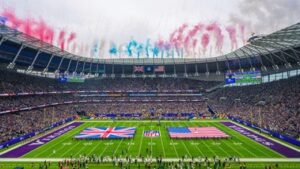
AI-Powered security for Tottenham Hotspur Stadium
Stadiums and arenas have evolved into year-round destinations for concerts, conferences, sports and community events. Tottenham Hotspur Stadium illustrates this shift, with commercial revenue rising from £255.2 million to £277.1 million in 2025, driven by events ranging from NFL games and major boxing matches to Beyoncé’s concerts.
This growing activity has made venue security more complex. Security is no longer simply about responding to incidents; it has become an integral part of venue management, with measures adapted to different events, risk levels, operational requirements and visitor expectations.
This responsibility will increase with the implementation of Martyn’s Law, expected to come into force in spring 2027. Large venues will need to strengthen preparedness while maintaining a positive visitor experience.
AI-powered video surveillance can play a central role. Instead of relying solely on operators to monitor multiple feeds, AI can detect suspicious activity, crowd congestion and unusual movements, providing real-time alerts and improving situational awareness. Operators can track people or vehicles of interest, monitor crowd flow and share intelligence with security teams and emergency responders.
AI also accelerates post-incident investigations through metadata and semantic search, enabling relevant footage to be located quickly. Beyond security, video intelligence can help venue operators manage crowd and vehicle flows, improve operations and enhance the overall visitor experience.
With Martyn’s Law moving towards implementation in the UK, venue operators face growing expectations around preparedness and public protection. AI-enabled video surveillance can help shift venue security from a predominantly reactive function towards a more proactive, intelligence-led capability, strengthening situational awareness while supporting safer, more efficiently managed visitor environments.